Saturday, April 25, 2015

Week 4: MedTech + Art

All plastic surgery hospitals in one street in Seoul
I am a person who always thinks medical technology can help form art. In this week’s class, Professor Vesna utilizes plastic surgery to show how medical technology can form art, and it is the fact I am familiar with (Vesna). In Asia, South Korea is called the world capital of plastic surgery, and “it has the highest rate of plastic surgery per capita” (Patricia). I went to South Korea many times, and there is a street which is filled with plastic surgery hospitals, and I actually did my plastic surgery there. Plastic surgery uses the medical technology to help people look more attractive, most
of Korean pop stars do plastic surgery. 

Orlan looks a bit weird
Korean pop group EXO, All members look similar
However, Dr. Howard C. Samuels states some people “have very skewed concept of beauty in today’s society”, and “they don’t realize that there is no such thing as a perfect face or body” (Howard). It is obvious that medical technology can form art, but if we overuse medical technology, it will either destroy the beauty of art or “destroy uniqueness and aura of art (IV, Walter). In the lecture, Professor Vesna shows Orlan’s example. Orlan is an artist who uses technology and medicine to an extreme, and she did plastic surgery over six times (Vesna). In Asia, we can also find some people who do plastic surgery too many times, and their faces are either all the same or very weird.


Acupuncture points picture 
dance which shows events in the human heart
 Even though I always believe that medical technology can form art, I have never thought that art can also help form medical technology. Acupuncture points picture is a good example, it uses drawing to show all the acupuncture points of human beings, and it can help study the medical technology. Another example is Dr. Buckenberg designs a dance which shows events in the human heart (Katie).


Medical technology and art certainly affect each other. Medical technology can help form some attractive art, and art can help study medical technology more. I believe that medical technology and art overall have positive mutual influence with each other.


Work Cited:

Marx, Patricia. "ABOUT FACE." THE NEW YORKER. 23 Mar. 2015. Web. 25 Apr. 2015. <http://www.newyorker.com/magazine/2015/03/23/about-face>.

Samuels, Howard. "Plastic Surgery Addiction." Dr. Howard C. Samuels. Web. 25 Apr. 2015. <http://drhowardsamuels.com/addiction-guide/plastic-surgery/>.

Vesna, Victoria. “Medicine Parts 1-3.” Lecture. Web. 26 Oct. 2012.

Benjamin, Walter. The Work of Art in the Age of Mechanical Reproduction. London: Penguin, 2008. Print.

Pence, Katie. "College of Medicine Alumnus Develops 'Artistic' Way to Teach About Heart Function." HealthNews. 1 July 2007. Web. 25 Apr. 2015. <http://healthnews.uc.edu/publications/findings/?/5109/5110/>.

Sunday, April 19, 2015

Week 3: Robotics+Art

In this week’s lecture, I have a deeper understanding about the relationship between robotics and art. I always know that technology and art have a close mutual relationship, and I also think more advanced technology will help us more. However, I learnt that technology will hurt art in some case. Walter Benjamin in “The Work of Art in the Age of Mechanical Reproduction” states that the mechanical reproduction destroys uniqueness and aura of art (IV, Walter). For example, we can see a large number of same paintings in the department store, and all of them are replicated by machine. Even though it is cheap, all the paintings are totally no difference, and it certainly destroys the uniqueness of art.
Paintings in the store


Astro Boy

Robot to clear up nuclear plants in Japan
 Robotic and industrialization bear a lot of controversies. In the lecture, Professor Kusahara introduces Japanese anime and cartoons which the content is based on robot. Japanese people like to create robot images, and they also try to make robot be their friends and involve more in human’s daily life. One example is a famous cartoon figure Astro Boy who is human’s friend. Another real life example is Japanese use robot to clear up the nuclear plate, and it saves countless people in Japan (Mari). Nevertheless, robot is not always people’s friend. Some people feel nervous that technology and robot will not only make us dumb, but also  replace us (Nicholas).  Developed technology will make robot smarter than human beings. At that time, robot will be out of control. One real life example is a lot of analysts might be fired, because computer can do everything they do with more accuracy and efficiency (19, Jack).

I personally love the robot and advanced technology, because it really helps me a lot. I trade stocks everyday, and computer system can help me screen the stocks which have some specific patterns (trading volume, price action, technical indicators and so on), and it really makes my life easier.

My daily stock screen page

Robotics and art can both benefit or destroy each other. It really depends on how people deal with the issue. This week’s lecture really shows me both sides, and I think robot has more positive influence on our daily life.


Worked Cited:
Benjamin, Walter. The Work of Art in the Age of Mechanical Reproduction. London: Penguin, 2008. Print.

Machiko Kusahara. Robotics MachikoKusahara 1. Web. 14 Apr 2012. <https://www.youtube.com/watch?v=xQZ_sy-mdEU>

Iwata, Mari. "Robots Star in Cleanup of Japanese Nuclear Plant." THE WALL STREET JOURNEL. 6 Mar. 2014. Web. 18 Apr. 2015. <http://www.wsj.com/articles/SB10001424052702304732804579421003952552062>.

Carr, Nicholas. "Automation Makes Us Dumb." THE WALL STREET JOURNEL. 21 Nov. 2014. Web. 18 Apr. 2015. <http://www.wsj.com/articles/automation-makes-us-dumb-1416589342>.

Egan, Jack. "Playing Stock Man." New York Magazine 1 Aug. 1983. Print.


Sunday, April 12, 2015

Week 2: Math + Art

The Viruvian Man
http://wundergroundmusic.com/da-vincis-vitruvian-man-actually-overhead-image-of-a-backbreaker-claims-historian-on-ecstasy/

I am extremely interested in the topic of art and math this week. Even though art and math are close related in our daily life, I rarely think about their relationship. Professor Vesna states in the lecture that math is applied a lot to art. People need to use math to calculate the volumes and dimensions in order to draw some shapes, and golden ratio is a really common ratio which contributes to a large number of art works. In “Flatland”, Edwin Abbot explains houses were built based on pentagonal five-sided shapes due to their mathematical principle, and I learn that we can perceive things in different perspectives. Besides, Artists also use math to finish their works. For example, Leonardo Da Vinci uses geometry and symmetric in his masterpiece “The Vitruvian Man”.


Great Pyramid
http://britton.disted.camosun.bc.ca/goldslide/jbgoldslide.htm
Mathematics not only can be applied to art, but also can be applied to architecture and science. Parthenon is a good example, and it was built by using golden ratio. Golden ratio makes Parthenon more attractive. Ancient Egyptians also used golden ratio, divine proportion and phi to make the pyramids more stable and good looking. For the application to the science part, it closely related to my personal experience. I am not only a business economic student, but also an experienced technical stock trader. The technical analysis I am using is Elliott Wave Theory, and it is really based on Fibonacci sequence. In the video “Fibonacci, Fractals and Financial Markets”, Robert explained how to predict the target price for a stock by using Fibonacci sequence, and the Fibonacci sequence is a natural sequence, and it appears everywhere in the world. For me, it is a perfect example which math has a close relationship with science. 


Elliott Wave Theory
All in all, mathematics is tied closely to art and science. Artists cannot create three-dimensional paintings without math, and pyramids should have already collapsed without applying mathematical principles. Math is everywhere, and it is significant.


Work Cited:

Robert R. Prechter, JR. “Fibonacci, Fractals and Financial Markets”. Web 12 Apr 2015. <https://www.youtube.com/watch?feature=player_embedded&v=RE2Lu65XxTU>

"“Da Vinci’s Vitruvian Man Actually Overhead Image Of A Backbreaker” Claims Historian On Ecstasy." Wonder Ground. Web. 12 Apr. 2015. <http://wundergroundmusic.com/da-vincis-vitruvian-man-actually-overhead-image-of-a-backbreaker-claims-historian-on-ecstasy/>.

Vesna, Victoria. "Math+Art." Unit2. Web. 12 Apr 2015. <https://www.youtube.com/watch?v=mMmq5B1LKDg>


Abbot, Edwin. “Flatland.” Princeton University Press. 1991. Web. 12 Apr 2015. <http://www.ibiblio.org/eldritch/eaa/FL.HTM>

Britton, Jill. "Golden Section in Art and Architecture." Title. Web. 12 Apr. 2015. <http://britton.disted.camosun.bc.ca/goldslide/jbgoldslide.htm>.

Noble, Jill. "Five Ways the Elliott Wave Principle Can Improve Your Trading Technique | Elliott Wave International." Elliott Wave International RSS. Web. 13 Apr. 2015. <http://www.elliottwave.com/freeupdates/archives/2012/08/13/Five-Ways-the-Elliott-Wave-Principle-Can-Improve-Your-Trading-Technique.aspx#axzz3X9ZiKC9l>.


Sunday, April 5, 2015

Week 1 Blog: Two Cultures

Combination of Chinese flag and American flag
http://brainknowsbetter.com/news/2013/1/15/cultural-change-goes-both-ways-just-like-on-joss-whedons-firefly


Even though the idea of two cultures is very new for me, I realize that it actually appears everywhere in my life. In my personal point of view, there is no such a boundary line to divide which culture you are. I am a business economic major which is a bachelor of arts. However, I personally love science very much, and I also need to take some science classes such as math. Besides, I was born in China, and I moved to United State when I was 15 years old. I have learned both western culture and eastern culture, and they are both part of me.


Science VS Art
http://www.scientificamerican.com/article/an-update-on-cp-snows-two-cultures/
In “Two Cultures and the Scientific Revolution”, C.P Snow introduces the idea of two cultures, the literary intellectuals and the science. He states“I believe the intellectual life of the whole of the western society is increasingly being split into two polar groups” (Snow 4). In Snow’s point of view, I should be on the art side of the polar. Separation of art and science 
North Campus VS South Campus
http://www.theuclafund.ucla.edu/news/nvschallengewinner.aspx
can be found in UCLA. UCLA is divided into north campus and south campus which is for art majors and science majors correspondingly.

As I said before, I believe that art and science can never be separated. In “Toward a Third Culture: Being in between”, Victoria Vesna thinks that tools and technologies are changing all the time, and it is a chance for people to learn both art and science to get more opportunities (Vesna 121). This idea is reflected in my daily life. Even though I am not a science major, I still have to learn some science class in the south campus. Besides, I am planning to get a math minor to improve my competitive advantage. 

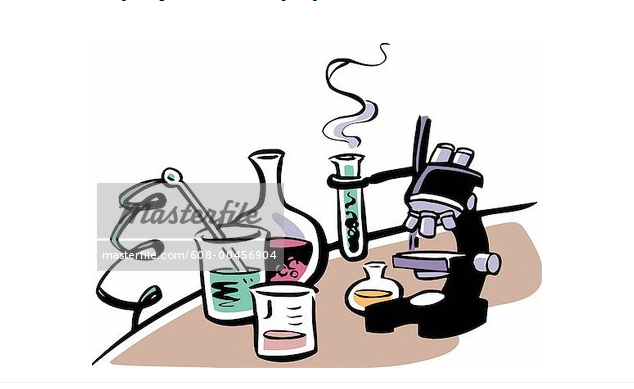
Cartoon to express a science lab
http://www.masterfile.com/stock-photography/image/608-00456904/A-display-of-lab-equipments

In addition, art can mix with science to create unbelievable magic power. One example is using cartoon (art) to express some science concept. Science concept is abstract and hard for common people. However, Cartoon (art) is more close to daily life. It not only can help common people to understand the science concept, but also can make science more interesting. 

I enjoy reading the idea of two cultures and third culture, and I personally believe the third culture idea.


Citation:

Mattu, Ali. "Cultural Change Goes Both Ways, Just Like on Joss Whedon's Firefly." Brain Knows Better-the Psychology of Science Fiction. 15 Jan. 2013. Web. 3 Apr. 2015. <http://brainknowsbetter.com/news/2013/1/15/cultural-change-goes-both-ways-just-like-on-joss-whedons-firefly>.

Snow, C.P. “Two Cultures and the Scientific Revolution.” Cambridge University, Cambridge. 1959.

Krauss, Lawrence. "An Update on C. P. Snow's "Two Cultures"" Scientific American. 17 Aug. 2009. Web. 4 Apr. 2015. <http://www.scientificamerican.com/article/an-update-on-cp-snows-two-cultures/>.

Vesna, Victoria. “Toward a Third Culture: Being in Between.” Leonardo 34.2 (2001): 121-25. Web. 6 Oct. 2013

Tritipeskul, Sirinya. "And the Winner of the North vs. South Campus Challenge Is....ALL Bruins!" UCLA Fund. 22 May 2013. Web. 4 Apr. 2015. <http://www.theuclafund.ucla.edu/news/nvschallengewinner.aspx>.

"A Display of Lab Equipments - Stock Photo." Masterfile. Web. 4 Apr. 2015. <http://www.masterfile.com/stock-photography/image/608-00456904/A-display-of-lab-equipments>.